KPF's guide to safer sleepovers
Whether it’s a living room tent, a teepee party package or a sleeping bag on the floor; sleepovers are a major milestone for kids. They build independence, create core memories and are a staple of UK birthday celebrations. However, hosting a sleepover - or sending your child to one - can bring a touch of parental anxiety. However, proper planning makes all the difference… so here is Kids Party Finder's comprehensive, stress-free guide to safer sleepovers, with the exact questions to ask and tips for being the ultimate host.
Sending your child to a sleepover (questions to ask the hosts)
It is completely normal to want clarity before dropping your child off for the night. You don't need to feel like you're conducting an interrogation, though… a friendly, open conversation beforehand ensures everyone is on the same page.
1. The logistics & supervision
- Who will be in the house? Are there older siblings, extra adults or visitors staying over?
- How often will the kids be looked in on?
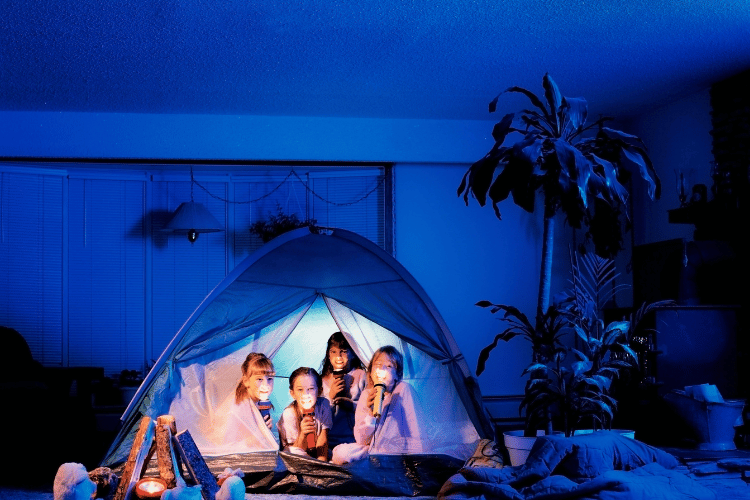
- What are the sleeping arrangements? Will the kids be in a living room, bedroom or dedicated teepee tents?
- What is the approximate bedtime and pickup time in the morning?
2. Safety & boundaries
- What are the rules around screens and devices? Will devices be put away at a certain time?
- What movies or games are planned?
- Do you have pets? (Crucial if your child has allergies or fears around dogs or cats.)
- Are there any specific household safety points to note? (e.g. indoor cameras or stairs)
3. Medical & comfort
- Are you comfortable with my child’s dietary needs or medication?
- What is the plan if my child gets homesick late at night?
- How do I get in touch with you if there is an issue?
How to host a safe & stress-free sleepover yourself
Hosting a sleepover isn't just about activities; it's about setting clear ground rules so the night runs smoothly.
1. Detailed plan
Before parents drop off their kids, send a quick group text or email covering:
- Drop-off and pick-up times
- The dinner menu
- The main activity or movie planned
- Who is in the home with emergency contacts

2. Screen & tech boundaries
Media access is one of the biggest challenges at sleepovers. Agree on a ‘tech basket’ time… collect data-enabled phones or tablets at bedtime to prevent late-night browsing, secret filming or social media messaging. Provide a simple PAYG phone that just has the children’s parents’ numbers saved in and no data access in case they need to call home. Lastly, stick to age-appropriate movies that all parents have approved.
3. Create a safe sleeping space
- Clear the way - Ensure sleeping areas, hallways and routes to the bathroom are marked and clear of trip hazards.
- Nightlights - Keep a hallway light or nightlight on so children can easily find the toilet in an unfamiliar house.
- Keep separate - The sleeping area should be reserved exclusively for the guests, away from high-traffic household areas.
4. Have a homesickness plan
Homesickness usually hits between 9:00 PM and 11:00 PM when the main activities wind down. Never shame or force a child to stay if they want to go home. Let them know right at the start of the night: “If you miss home at any point, just tell me, and we can call your mum or dad - no problem at all.” Also, it’s good to have a quiet backup spot (like a spare bed or sofa) where a tired child can rest if they get overstimulated or aren't ready to sleep in the main group room.
See how much easier that is? It’s all about having a plan and some ground rules! Not sure what to do during your event? You can’t go wrong with a gaming party.


